 Socialist Party Wales Socialism In Wales
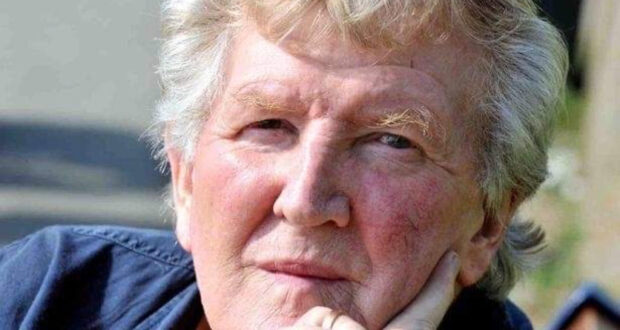
Tower Colliery National Union of Mineworkers’ Lodge Secretary 1969-1994 • Tower Workers’ Cooperative Chair 1994-2023
By Mariam Kamish, Tower NUM Lodge Committee (personal capacity) and Socialist Party Wales
Tyrone O’Sullivan became a household name in 1994, as the South Wales miner and trade unionist who led his members to a stunning victory when they stood up to Tory plans to privatise the coal industry. Under Tyrone’s leadership, Tower miners bought their pit with their British Coal redundancy money and set up a workers’ cooperative. After years of pit and factory closures, many across South Wales felt they’d got their pride back.
But it was as a militant NUM Lodge Secretary that Tyrone played an important role in the struggles of the 1970s, 1980s and early 1990s.
He made his mark early. At just twenty-three, in 1969, he was elected Secretary of Tower Colliery NUM and he developed his powers as an orator in pit head meetings.
The miners won the strikes of 1969, ’72, ’74 and ‘81, but under Tyrone’s leadership, Tower miners didn’t just fight for themselves. The most militant pits were famous for their solidarity strike action. And Tower was second to none.
Any workforce in trouble could ring the Lodge Office – and miners would go straight down to picket. At Pirelli, when Tower arrived, the pickets had already gone back in. The boss had settled when he heard the miners were coming.
When women in Hoover’s – inspired by Dagenham’s – demanded equal pay, Tower NUM gave them full support and opened the Tower canteen to them for meals.
Tyrone, with other left Lodge secretaries, organised strike action, coordinated delivery bans and raised finance for workers in struggle and other protestors all over Britain and all over the world.
Tower miners went to Grunwick, Greenham Common and dozens of less well-known struggles.
With other left Lodge Secretaries, Tyrone built the Cynon Valley Joint Lodges – including Maerdy and Nantgarw, outside the Cynon Valley – to organise coordinated action.
In the early 80s, he played an important role in the Triple Alliance of Miners, Nurses and Seafarers. Which occupied Aberdare and Rhydlafar Hospitals – saving them from closure – and took strike action, along with printers, in support of nurses.
A ship’s crew were sacked in 1982 for striking for the nurses, while off the coast of Africa. Tyrone was at the forefront of mobilising floating pickets in small boats – miners, nurses and sailors in Barry Harbour – to fight ‘til the sailors were reinstated.
After the national strike of 1981 ended with patently false promises, Tyrone knew Thatcher was preparing for war. As pit closures continued, along with Jack Collins, Sec of Kent Area NUM, he invited down the other areas to discuss and prepare.
•••
In November 1983, the NUM voted at national conference to strike the next time any pit was threatened.
So, when the closure of Cortonwood in Yorkshire was announced in March 1984, Tower voted solidly for strike action. That was not the case at most of the 28 South Wales pits – who felt Yorkshire should have come out in support of the occupation at Lewis Merthyr the previous February. With characteristic boldness, Tyrone spearheaded a lightning plan to bring out the coalfield. As each colliery was picketed out, it joined in picketing the next. Until by the end of the week, every pit in South Wales was on strike. One of the crucial actions of the whole dispute.
One day, someone should write the story of Tyrone and Tower in 1984-85. A few snapshots must suffice here: Tyrone part of the crew barricading South Wales NUM offices in Pontypridd to prevent the sequestration of union funds. While President Emlyn Williams addresses crowds outside.
A fleet of SOGAT print union lorries carrying solidarity down the motorway – Tyrone’s suggestion to replace a cheque in the post. The pit deputies (NACODS) – at Tyrone’s call – refusing to cross Tower picketlines for the duration. LPYS organised striking school students, inspired by the miners, running through the streets.
With so few scabs in South Wales pits, there was plenty of scope for sending out flying pickets. Tyrone led inconspicuous minibus loads of miners all over Britain, as did a number of South Wales NUM lodge secs. And not just to picket. For example, very early one morning, at a pit I won’t name, Tyrone sent an advance party of half a dozen youngsters to hide in the bushes. With directions to let down the tail gates when lorries emerged carrying coal, bound for the power station.
Just one tailgate dumped five tonnes of coal all over the road. So, on their own initiative, the men went marauding. They broke the seals on the self-rescuers in the lamp room and disabled the time clock before all hell broke loose and the police charged in. Picketing was off the cards for the day, but no scabs could go underground.
Other times, miners faced heavy police violence. At Orgreave, as mounted police chased miners uphill, mates had to give Tyrone a helping push from behind, while the blows of police sticks rained down upon them. Tyrone and co ended up panting down back streets, where locals opened their doors and whisked them in to safety.
A ‘Civil War without Guns’ is the very accurate title of Ken Smith’s excellent book on the strike. If Arthur Scargill was their Field Marshall and NUM Area Secretaries were the generals, Lodge Secs like Tyrone – with their highly mobile forces – were guerrilla leaders in the field.
Trouble was, guerrilla actions were sometimes undertaken by individuals with no direct connection to those they commanded.
Tyrone strongly resented anyone who led pickets into dangerous situations with no way of getting them out again and who then buggered off, leaving all the risk to the troops. This was the case at Port Talbot. One hundred and six miners were sent up ninety-two cranes, where they bravely repelled all boarders for over forty hours. Two Tower men jumped from the cranes on the Friday night and swam away. But only when threatened with a charge of ‘mutiny on the high seas’ did the rest come down, to be taken – one police officer to each miner – away to the cells.
This was serious – not just for the individuals, but also for the strike – as many convicted of offences were bound over to keep the peace and in that way banned from picketing. If convicted twice, they faced jail time.
Inspired by the NUM’s fight, trade unionists – including South African miners – sent money, food and supplies from all over the country, all over the world. Big names and small put on benefit nights.
Tower Colliery’s Women Against Pit Closures showed great initiative on picket lines and in many other actions. Its leading lights went on speaking tours, including to the USA and Spain. With Tyrone giving the lead, Tower men – as much as the women – made up food parcels and organised community support. But conditions were tough. Televisions on hire or HP went back to the shop. Despite the union’s best efforts, a few miners lost their houses.
Concessionary coal (part of a miner’s pay) was cut off for striking miners, At mid-winter, Tyrone – like everyone else – had to take a sack and go picking what coal he could find off the tips. Technically this was stealing, but he had no choice.
Still – miners were mainly young men and they kept up their spirits. Unless they were sneaking in somewhere, people generally heard them before they saw them. Not just singing ‘Here we go, Here we go, Here we go’ – but more often as a wall of noise.
Quite often a car full of mates – nothing to do with the pits – would stop and join a miners’ picket on their way to work at a factory or building site. For some, that was their entry into a life of political activity.
The miners’ strike galvanised young people, women – and men who were not miners – across the South Wales Valleys. Tyrone always made space for them on coaches to demos. If one coach was full, he’d put on another and fill that.
He treated even the very young as equals in the class struggle and fed them with the knowledge they needed. Anyone prepared to fight was a valuable comrade – let loose to make their contribution.
Tyrone was not the only fighting Lodge Secretary. Others have their own stories. But this is Tyrone’s – and some of the friends he made in the wider trade union movement during the strike have also written tributes worth reading.
A million pounds went into buckets for striking miners on the streets of Britain every week in 1984-85. Collection tins stood on the counter in corner shops in the most diverse communities – in non-mining areas, like Birmingham.
Working class people were cheering the miners on, because the miners were fighting Thatcher and the Tories. Many instinctively felt that if the miners won the fight for their jobs and communities, the confidence of the whole of the working class would soar so high that Britain would be on the road to revolution, to changing society. Tyrone was convinced of it.
When the strike ended without a victory after an entire year, Tyrone – almost alone among South Wales Lodge secs – did not allow the movement to feel defeated. The very next day, ignoring the colliery manager, he sent a coachload of Tower miners up to London and another to Liverpool to thank supporters.
And such was Tyrone’s leadership of Tower NUM, that – in the months that followed – the manager could not run riot, as managers did in many pits.
The government moved fast now – despite previous promises – to close colliery after colliery… Tyrone gave full support to any Lodge that chose to fight. At Tower, the NUM defeated an attempt to privatise the Tower Washery, saving every job.
•••
In October 1992, Helseltine announced the closure of 31 pits. Only ten, Tower among them, were to remain open.
Tyrone had always been an ardent Arthur Scargill supporter, so it was in that spirit he stood up and said at the emergency conference, ‘Arthur, if when you die, they put on your grave, “He fought”, that won’t be enough. This time, we have to win.’
As other pits had closed after the end of the strike, diehards from the rest of the coalfield had come into Tower. So that by this time, the ranks of Tower stalwarts had been strengthened by militants from Maerdy, Penrhiwceiber, St. John’s and other collieries.
Even the contractors had been organised – an unheard-of coup – by a class fighter so notorious that even Tyrone’s best efforts couldn’t persuade the manager to take him on as a British Coal employee.
On Wednesday, 21 October, after the Heseltine announcement, Tyrone filled 40 coaches from South Wales for an NUM demo that swelled to 100,000. At the TUC demo on the Sunday, with a quarter of a million on the march, thunder and lightning broke over the demo. We joked that even the weather was striking in solidarity. On the way out of London that evening, drivers tooted their support when they saw the Rhondda livery on the side of our coach.
The government briefly took a step back, but they were clearing the decks to sell off the ten prize pits. In April 1993, the fight for Tower became a war for survival. Tactics and strategy were hammered out in daily – even hourly – Lodge discussion.
The Lodge went for the high-risk strategy of the NUM itself putting the pit into the colliery review procedure to stop British Coal pulling a fast one, as had happened elsewhere. That would gain us 90 days to build public support.
Tyrone later told the story of that period of intense activity in a pamphlet, ’11 Days that Shook Britain’. At the high point, two vans rushed around Merthyr with loud hailers, shouting, ‘Get up Tower now!’ And people did.
Every night the Welsh television news covered – with a fancy graphic overlay – a delegation of Tower miners marching in their helmets from the pit to Parliament.
Tyrone turned down an offer by the Contractors to occupy the pit. A workers’ occupation was exactly what the fight against privatisation needed. But Tyrone already had a plan to go it alone. Instead, he went for a token occupation of the pit by MP Ann Clwyd.
Eventually, British Coal forced a vote and Tower miners became the first pit in Britain to refuse huge redundancy pay outs – and vote to keep their pit open. (The Liverpool Dockers had done the same in 1989.) During that week, Tower miners voted to turn down the money, not once, but twice.
Before the third vote, Tyrone told the men, ‘I’d fight on even now, but –‘. He had decided the men should take the money and buy the pit, though all he could say was – ‘I promise you. I have a plan.’
And so, Tyrone found himself in the paradoxical position of begging the men – some of them in tears – to vote for closure.
Many played their role in the fight to save Tower. When Billy Bragg came down to play a benefit gig, he turned out to be about seven feet tall. Tower miners and supporters, as always, were resolute and unstinting. But without Tyrone’s unshakeable confidence and drive – his gifts for leadership and building a movement – the fight could never have succeeded.
While the matter was in debate, we argued for Tower miners to fight on – with Arthur Scargill – against privatisation. We knew the pressures a workers’ cooperative would come under, as an island of attempted socialism in a sea of capitalism. One miner actually left the pit over this issue.
Once the Tower Employee Buyout (TEBO) went forward, what was essential was that the union retain complete independence. Formally, that was always the case, but with Tyrone leading the cooperative, the reality was fraught with challenges.

When British Coal handed over the keys to Tower Colliery in December 1994, we inherited internal documents that proved what the NUM had always claimed: British Coal had lied to close South Wales collieries with a great future.
Decades of NUM battles for safety at work had ensured colliery managers and engineers had to be properly qualified. Now, we wanted to replace them with workers, but that would take years.
Still, because the managers had no power, it felt like we had no bosses. You don’t know what that means ‘til you have that weight taken off your shoulders. It was like a window on the future.
In the early days, the workforce was so gripped with excitement, output went up drastically. One individual even tried to go underground to work with a broken leg. His brother counted his toes in hospital, ‘This little piggy stayed home…’
News of the workers’ cooperative travelled all over the world. The Indian Railway wrote to ask if they could buy Tower coal. Almost every week, Tyrone had visitors – Polish miners, National Geographic, Lenny Henry, academic researchers. Tyrone’s office was opposite the baths. The door was always open and you never knew who you’d find in there.
Visitors weren’t even always what they seemed. One night Glyn Roberts and I took Turkish miners down the Penywaun Club and discovered over a pint, they were in the PKK.
When a conservative candidate found his way onto the yard, Glyn chased him all the way back to the main road, threatening to throw him down the pit shaft.
Such was Tyrone’s reputation, that outside the pit, total strangers – a builder or a someone in a shop – hearing where we worked would ask, ‘How’s Tyrone doing?’
We were all given tickets for the premiere of the Tower Opera at the Grand Theatre in Swansea. In an on-stage pithead baths, a naked male voice choir sang, ‘Tyrone! Tyrone! We have to save the pit!’
Director Jean-Michel Carré made a documentary about Tower, in which one of the men (I won’t embarrass by naming) actually says of Tyrone, ‘I would die for him’.
Agents representing David Puttnam and Colin Welland of ‘Chariots of Fire’ fame arrived to negotiate film rights. Tyrone turned them down, because they insisted on a fictional sexual subplot to ‘spice up’ the story.
•••
The Tower cooperative recruited the first mining apprentices since 1983 – and while Tyrone didn’t follow through on proposals to include women apprentices underground – the recruitment made a big impact.
Breaktimes – underground and on the surface – have always been where young mineworkers learn their politics. Sitting on the ground with a sandwich and a flask, they’d listen – and chip in – as older workmates debated issues. From how to stop the invasion of Iraq – to whether we’d still use money under socialism – to how to fight the bosses. While the pits were open, that socialist influence filtered out to communities.
But mining is not environmentally sustainable. Tyrone put together a working party to green the Tower Tip, clean up the water outflow, monitor air quality and hold monthly community meetings.
He later developed what was then termed a Clean Coal Technology strategy, which he took to the press and ensured was debated in Parliament. Not as a long-term solution, but as a stop-gap to make nuclear power unnecessary while greener energy solutions came online.
Being the last deep mine (as opposed to drift) in South Wales was strange. In 1984, there’d been 173 pits in Britain and over 230,000 miners, linked by a thousand strands of competitions, galas, shared experience. Sometimes, it was hard to remember that wasn’t all still out there.
The isolation weighed on Tyrone more than anyone. Even before he took over as Chair of the Board of Directors, Tyrone was the undisputed leader of the cooperative. He came under intense pressure from the workforce, management, the market, Aberthaw power station and politicians – not to mention the adulation of genuine admirers and sycophants alike.
In 1996, the pit heard on the news that Tyrone had gone to the palace for an OBE. The workforce responded in time-honoured Tower fashion with utter silence. No doubt, this hurt Tyrone’s feelings as much as the deviation from his principles hurt ours.
At the same time, the Labour Party turned Tyrone down for the Rhondda shortlist for the Welsh Assembly elections – afraid he’d be too left wing.
•••
In 2008, Tower closed. Tyrone admitted that if he’d been 15 years younger, he’d have kept the pit open – there were options, but he knew no help would come from a Labour government still afraid of militant miners. Instead, as the pit was run down, he moved to secure jobs for those who wanted them at Aberpergwm and Unity Collieries.
After a life time of fighting opencast mining – on environmental grounds, as well as to defend jobs – Tyrone proposed much of the Tower surface be opencast. He had plans for later Council Housing on the site, which never came to fruition.
•••
A few words on Tyrone the man. There’s something about the dangers of working underground that gives rise to high spirits, practical joking and banter, as well as comradery.
Tyrone loved all that side of pit life, but it was his warmth and enthusiasm that made people love him. He had a fire that was infectious. Hearing the tributes from people who never knew him, it’s clear that inspiration worked even at a distance.
The son of a pit deputy, Tyrone trained to work underground as an electrician, one of the favourite choices in the pit for the very clever.
Music, art and books were part of the culture of the local institutes and workmen’s halls in the South Wales Valleys, all built by subscription by miners and their families. Tyrone sang in the Abercwmboi Opera. He painted in water colours, read, wrote stories and coached youth basketball.
During the cooperative, Tyrone kept up the traditional Tower children’s parties and he loved riding a sleigh around Aberdare as Father Christmas. Despite his ease with people, his family always came first – and at heart he was a very private individual.
Tyrone was profoundly anti-sexist and anti-racist. As a determined fighter against apartheid, he mobilised the NUM to prevent the local Cwmbach Choir touring South Africa, among much else.
Mining is highly skilled work, but there is always a way to provide a place for the differently abled if you want to. A few had always worked in the pits – and under the cooperative, two young people with learning difficulties were recruited.
Tyrone became a trustee of the beautiful old house South Wales miners own on the golden sands of the English Riviera. When Bournemouth Council wanted to buy the land for redevelopment, he played a role in preventing the closure. Today, Court Royal continues to provide a spectacular week’s holiday for free to any retired South Wales miner – (or at low cost, if they choose to bring a partner or other family member. Those still working can also book at certain times of year.)
One of Tyrone’s few failures was his battle to save the lavish 19th century manor that had housed Talygarn Miners’ Hospital. Talygarn had been given by the miners to the NHS. The Tories sold it. If you don’t finish off capitalism, no win is ever safe.
•••
While Tower was open, Tyrone kept the red flag flying from the pit head – a real life embodiment of the badge Tower NUM produced during the miners’ strike. The sight raised our hearts, but perhaps it lowered expectations.
Nevertheless, during the years of the cooperative, Tyrone welcomed an endless succession of workers in struggle and was generous with his time and efforts.
From the literally hundreds of struggles given financial and practical support by Tower NUM – quite separately and in its own right – during that time, let us remember here the magnificent Liverpool Dockers, striking Siberian miners, Timex in Scotland, Friction Dynamics in North Wales and the Health Workers’ Union in Sri Lanka after the Tsunami.
Tyrone remained an NUM member, an ardent socialist and a supporter of workers’ struggle. But after the last round of pit closures, he stopped believing struggle could change society. Hence, his pragmatic search for alternatives after 1994.
Tyrone was a lifelong Labour Party member. During the early to mid 1980s, he was also a subs-paying member of the Militant, who opposed the right wing in the union and addressed many Militant public meetings before and during the strike.
He vowed he’d leave the Labour Party, if they abandoned Clause 4. But even through the Iraq War, he stuck it out – and when Corbyn was elected leader, he believed he’d been justified. After the Starmer stitch-up, he campaigned for left MP, Beth Winter, opposing Labour’s move to the right.
Some in the Labour Party used the Tower Cooperative to sow illusions in the possibility of ‘a separate peace’ for workers. In fact, the cooperative presented in microcosm many issues that will be faced by a young socialist society. That experience has a wealth of lessons for the workers’ movement still to be written up and assessed.
We have Tyrone to thank for that.
Tyrone O’Sullivan was a giant of the South Wales Labour Movement, a true friend and comrade. The credo he lived by was the lesson he taught by example, ‘It’s always worth fighting’.
This article was added to on June 29th 2023
Alec Thraves’s review of Tower of Strength by Tyrone can be read here

