 Socialist Party Wales Socialism In Wales
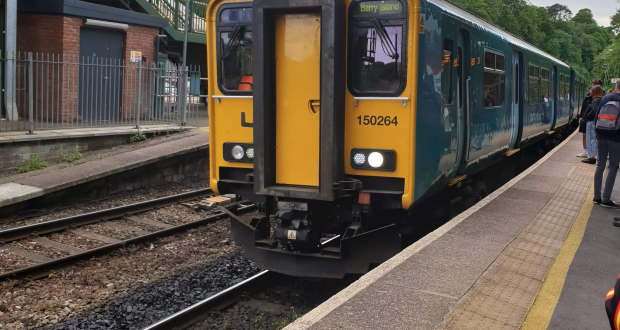
Republication of an article from October 23 2020. Train operations were transferred to state-owned Transport For Wales earlier this month.
By Dave Reid
The Wales and Border rail franchise will effectively be nationalised in February as franchise holding company Keolis Amey (KA) walks away from its contract. The collapse of ticket sales in the Covid crisis has led to huge losses for the conglomerate and so the company will hand over the train operating services to publicly-owned Transport For Wales.
Most rail users and rail workers will welcome the bringing into public ownership of the train operations. Rail privatisation has been a byword for inefficiency and corporate greed. The train operating companies (TOCs) could only operate with huge subsidies but still paid big dividends to company shareholders, while rail users suffered overcrowding and record high fares.
The company is withdrawing from the contract despite receiving £267m in subsidies from the Welsh government in just two years. Ken Skates, minister, said that the company would have collapsed if the Welsh Government had not stepped in. Deputy Transport Minister Lee Waters said: “The whole business model collapsed in the face of Covid because the revenue was not coming in and Keolis in effect were not prepared to shoulder their share of the pain.”
As usual the government has nationalised the losses while allowing the profitable parts of the industry to remain in private hands. Keolis Amey will retain control over the infrastructure in the Valley Lines. Prior to 2018 the rail tracks in the Wales and Border network were publicly owned and the train operations run by a publicly-subsidised private company. But the Welsh government handed over the tracks to Keolis Amey when the new franchise was agreed. Now the roles have been reversed.
However, because the Welsh government did not demand the power for the Senedd to nationalise train operating franchises, even this would be a temporary nationalisation. The Welsh government has used its powers to appoint a public “operator of last resort” to run rail services as a result of Keolis Amey’s failure to meet it contractual obligations. But that can only last as long as the current franchise. The Welsh Government must demand the devolution of powers to permanently retain the service in the public sector.
And what of the maintenance depots and the train manufacturing plant that was part of the deal with KA? If they keep hold of these assets they will hold the profitable parts of the business while Transport For Wales carries all the losses.

The nationalisation of the trains presents an opportunity for the Welsh government to hugely improve the service that encourages more use of public transport to the benefit of passengers and with big environmental benefits. But that means a huge investment into a crumbling system: electrification, new stations, new rolling stock, new lines and integration with the bus network (which should also be brought back into public ownership) with transferrable tickets. Rail fares must be reduced to attract passengers – they are currently among the highest in the world.
The Welsh government must demand that investment from the UK government which holds the purse strings and has cancelled electrification of the main line to Swansea while spending billions on the HS2 white elephant. 10% of the UK’s rail track network are in Wales but only 3% of rail infrastructure spending is spent in Wales.
The danger is that the Welsh government will take over a crumbling system and carry all the losses while the service does not improve and passengers continue to pay high fares in overcrowded trains.
A mass campaign must be launched to demand that the investment is won from the UK government. A socialist Welsh government would be at the forefront of this struggle not presiding over managed decline.
Socialist Party Wales demands:
- Nationalise the whole Welsh rail infrastructure – end subsidies to private corporate scroungers
- Nationalisation of the bus network and its integration with rail into one Welsh public transport system
- For rail electrification across the whole network
- Massive investment into the rail network for South Wales and North Wales metros
- For the Welsh government to initiate a mass campaign involving transport unions, rail users and environmental campaigners to demand the power for permanent nationalisation and for the necessary rail investment for Wales from the UK government
- For a free, integrated public transport system