 Socialist Party Wales Socialism In Wales
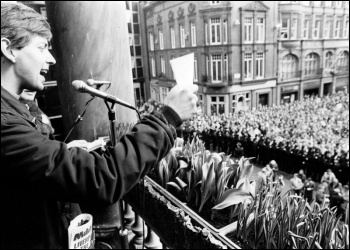
Dave Walsh, Liverpool Socialist Party member, is chair of Liverpool and District Trades Union Council. As a teenager in the 1980s, he was one of hundreds of young people employed as an apprentice by Liverpool’s Militant-led Labour council which defied the cuts and beat back Thatcher’s Tories.
For many years, the Socialist Party has put the demand for a new mass workers’ party central to our political programme. Jeremy Corbyn and Zarah Sultana’s ‘Your Party’ announcement and the 800,000 who signed up to support it, shows the huge appetite that there is for a new party to fight on our side against the capitalist bosses.
For ‘Your Party’, or any new party, to develop into a mass democratic organisation of workers and youth capable of defeating the capitalist class, then it should be rooted in working-class communities and the trade unions. We have argued for it to adopt a federal structure that allows for bodies of the trade unions – the existing mass organisations of the working class with over 6 million members – to affiliate while also maintaining their own organisational structures and identity. Likewise other workers’ and socialist organisations and parties would be able to affiliate.
A clear example of the importance of democratic structures, and how a federal structure can work, is found in the titanic struggle in Liverpool between the Militant-led Labour council, elected in Liverpool in 1983, and Margaret Thatcher’s counter-reforming government. Throughout that struggle, Militant, the Socialist Party’s predecessor, mobilised the power of the city’s working class. The campaign built in our small northern city was so great that its 47 Labour councillors were able to inflict a tremendous defeat on Thatcher’s Tory government.
During this period, Militant’s fighting programme became the main political opposition to Thatcher’s counter-reforms. The campaign made international headline news, and Militant used that platform to make the case for international socialism. The struggle became an inspiration to millions of workers around the world.
Councillors were on the front line, they were subject to a viciously hostile campaign of lies in the capitalist media accusing them of economic recklessness and corruption. And they lived under the constant threat of legal action, which ultimately ended in the High Court, where they received huge fines and were eventually undemocratically removed and banned from office.
But they were able to stand firm against relentless pressure from the capitalist class. The thousands of homes, the parks, nurseries and leisure centres that Liverpool City Council built, defying Thatcher’s cuts, still stand.
Organised working class
It’s important to recognise that the councillors’ stand was made possible because it was built on the powerful foundation of the city’s organised working class. Crucial in the task of building that movement was the democratic structures that existed in Liverpool’s Labour Party at that time. The District Labour Party (DLP) democratically debated and decided the course the councillors should take. It was made up of well over 400 delegates from branches in every ward, trade unions organised in workplaces and from the Labour Party Young Socialists.
Militant recognised the enormous potential of these democratic structures, but also knew that the Labour Party’s right-wing leadership was adept at using the party’s bureaucratic machinery to undermine rank-and-file democracy.
In the 1970s, de-industrialisation and stagflation ended Britain’s post-war boom, but Liverpool’s economic decline was more extreme because of the effects of containerisation in shipping. This destroyed tens of thousands of jobs in a city heavily reliant on its docks for employment. From 1964 onwards, Militant had warned that capitalism would founder, and workers would need to wage an almighty struggle to stop the ruling class destroying all the gains the working class had won in the aftermath of World War Two. In the harsh conditions that existed in Liverpool, Militant’s warnings hit home, and it was able to build support for its ideas, it attracted fresh new layers of workers and youth into political activity.
Militant activists built up local Labour Party branches and armed new members with the strategy and tactics needed to overcome bureaucratic barriers and strengthen rank-and-file democracy. From there, they were able to elect capable, committed Marxists to leading positions. By the beginning of the 1980s, Militant was the dominant force within the DLP, with our late, great comrade Tony Mulhearn as its president.
The next task was to get elected, but years of broken promises under previous Labour administrations hampered these efforts. However, through the network of ward branches, Militant built a small army of dedicated activists who did the painstaking work of leafleting and canvassing, eventually convincing residents in their communities that this was a Labour Party worth voting for. In 1983, Labour took control of the city with a small majority of just three seats.
Liverpool’s Militant record
On taking office, the council immediately cancelled the 2,000 redundancies planned by the previous Liberal administration. They reversed funding cuts to all council departments, and jobs and services were protected. Nursery schools were built to address the chronic shortage of places and sports centres were built in working-class areas where they were desperately needed. They created hundreds of apprenticeships for young people in housing and vehicle maintenance. And they began to demolish the slum maisonettes and tenement blocks, replacing them with attractive three-bed semis and bungalows with front and back gardens.
The capitalist media was alarmed and soon waded in, accusing the council of recklessly spending money that didn’t exist. But Militant pointed out the money had been stolen from the city to give tax cuts to the rich. They called on the working class to mobilise in support of their campaign to defeat the Tories and get the funding needed to meet people’s needs. In November, just seven months after being elected, more than 20,000 people marched at a rally supporting the council campaign. It was clear by now that the DLP had tremendous authority in the city.
Attacks from the media ramped up, with local and national news accusing Militant of intimidating its opponents. In truth, what they were referring to, was the growing number of working-class members attending ward meetings and demanding Militant’s programme be implemented. But for all of their lies, the media couldn’t hide the fact that Militant’s programme was transforming peoples’ lives for the good, and they couldn’t stop a landslide victory at the election in May 1984.
That huge victory shocked Thatcher and the Tories. Because they were fighting on two fronts with the Miners’ Strike still raging, they were forced to give in to the council’s demands and released £30 million of funding (£150 million adjusted for inflation). This money allowed the council to continue implementing its radical reforms.
Inspired by the victory, many Labour councils around the country discussed the idea of setting a needs budget. The campaign that emerged nationally was known as the ‘rate-capping rebellion’, in which councils defied government attempts to cap income councils could raise from rates on businesses and residents. A temporary united front of councils developed, but other councils’ stands faded away. The approach taken by most other councils bore no resemblance to Militant’s campaign of investing and funding the services needed, and then building a grass-roots movement capable of defending those gains.
Labour leader Neil Kinnock was aware that Militant’s campaign in Liverpool had succeeded because of the party’s democratic structures, so he consciously set about hollowing them out.
Later Labour leaders continued that process, with every change designed to concentrate power at the top. Among those changes was the introduction of a ‘one member one vote’ system, used by the Labour right as a measure to dilute workers’ collective influence in the Labour Party structures through the trade unions. It was one part of the process of transforming the party into an out-and-out party of the capitalist bosses.
One of the changes implemented in 2014 following the Collins Review, abolished the electoral college and allowed new registered supporters to pay just £3 and have an equal vote in leadership elections.
Ironically, following the law of unintended circumstances on the part of the Labour right, it was under this system that Jeremy Corbyn was elected as leader in 2015, not winning an overall majority amongst the party members but coming out decisively ahead amongst the registered supporters and trade union-affiliated members. But Corbyn only made it on to the ballot paper because of the stupidity and complacency of some right-wing Labour MPs whose signatures got him over the threshold of support from 15% of Labour MPs.
In her excellent article in the June edition of Socialism Today (‘Learning the lessons of Syriza’ at socialistparty.org.uk), Hannah Sell explains how in 2015, Syriza, a new left-wing party in Greece, won mass popular support for its anti-austerity programme but failed to build democratic, party structures that would harness the power of the working class. All the party’s policies and tactics were therefore decided by ‘charismatic’, intellectual leaders with no real accountability to a working-class membership. Once the leadership caved in under pressure from European capitalist powers, there was very little left to hold the party together.
Compare that to the situation in Liverpool. Labour Party leader Neil Kinnock made his treacherous speech at the 1985 party conference condemning the Liverpool struggle, this was followed by a bureaucratic witch hunt against Militant. All other Labour councils abandoned any idea of a serious campaign to fight Thatcher’s attacks and the Liverpool campaign was left isolated. But the councillors in Liverpool carried on fighting, refusing to implement cuts, building houses, taking on apprentices, defending jobs and services, and continued to win stunning victories at both elections in 1986 and 87.
Courageous stand
Our party rightly celebrates the courageous stand made by the 47 councillors who stood firm for four years under immense pressure. But it’s inconceivable that they could have carried on fighting, if it wasn’t for the mass support they received from their ward branches. Those branches were not weakened, if anything members became more determined than ever. Elected branch officers in every ward continued as before, holding the party structures together against Kinnock’s bureaucratic attacks.
Ward branches continued to be a hotbed of activity, debating motions that their elected delegates took as resolutions to the DLP, building the campaign against the Tory government’s attacks. DLP meetings, made up of ward and constituency delegates, as well as delegates from affiliated unions and Labour Party Young Socialists, continued to build and thrive because members were in control.
Thousands of working-class people remained active members of Liverpool’s Labour Party because they were in control of their local branches and they mobilised demonstrations of up to 50,000 people. This is how the Militant Tendency built a democratic workers’ party with a Marxist leadership in Liverpool. It still serves as a shining example for the struggle to build a new mass workers’ party.
- Read more: Liverpool: A City That Dared To Fight by Peter Taaffe and Tony Mulhearn, £10 at leftbooks.co.uk


