 Socialist Party Wales Socialism In Wales
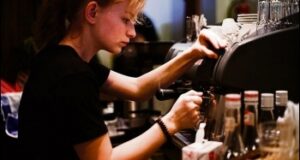
By a Cardiff bar worker
Working in the hospitality industry, has been described by some in the past as a form of ‘Stockholm syndrome’. We like our job, the people we meet and the service we provide, but why should we just accept the inevitable exploitation and insecurity’s we will face on shift? And it’s not like hospitality bosses haven’t got enough money to spread around – the hospitality industry makes more than £75 billion a year, and that’s not even taking into account the immediate knock on effect with sporting events and tourism for example with the local economy.
It’s not surprising then that hospitality bosses, wanting to do everything to keep as much money for themselves don’t recognise trade unions. Hospitality workers are dominated by students and young people- most of which in the current period haven’t been in a trade union or know much about them. Hospitality bosses take advantage of this, and have a complete disregard for our living standards.
Our so called ‘guaranteed minimum hours’ (GMH) are always a worry. At the beginning of COVID-19, with sporting events being cancelled, limits on tourism and numbers in groups, it at times got very quite, and so many of us got sent home hours early. Officially, we are allowed to say no and are allowed to stay on to do our full shift, but in a unionised workplace, with several managers on your back demanding you go home, what are we supposed to do?
This has always been a problem. Even before covid, our well earned holiday days were used (sometimes without our permission) to be used to basically top up our pay to ensure it was around the minimum of money we would normally get from our GMH. This means we get less holiday days of our own choosing- which is completely unfair.
Of course bar workers like our ourselves accept that at times we will work unsociable hours- that’s the name of the game. But it needs to be done fairly. The work rota is put up, sometimes with less than two weeks notice, and can change weekly, even days before our shift. If we’ve made plans with friends or family, that are now at risk with the newly changed rota, it’s always a struggle to try to get the shift covered or swapped.
And of course it depends on the temperament of which manager is in… if they’re in a bad mood or simply don’t care then 9 times out of 10 you’ve got no chance. There was even an occasion recently, where a student was put down to do a shift at the same time he was meant to do an exam! Thankfully, it was sorted in the end, but there’s still occasions where students are expected to do a shift before or after an exam. I couldn’t even imagine the stress they go through.
There’s no collaboration with the rota whatsoever, which means it’s difficult to plan our social lives, but also brings down the mood of the workforce. How does this make sense for anyone? Even though most workers have now got at least two dose of the vaccine, including in the bar I work in, there’s still concerns on catching the virus, as we come into possible contact with hundreds of new people in each shift. You’d have thought that pub bosses would be more cautious than ever, given the fact that rules have ended here in Wales. Yet, the pub manager advised us to delete the NHS test and trace app, as “too many” of his workforce were being told to self isolate from the app.
Then of course certain managers were openly criticising the app, saying how it’s a waste of time and not accurate. Both things might be true about the privately owned NHS app owned by the mates of the Tories, but why plant the idea of discouraging us to care about our own health? It’s clear that they’re preferred attitude, is for us to come in- no excuses to make sure the pub makes enough money for the big bosses- regardless of the effect on our health.
They will go to any lengths to keep us working. At one stage, a staggering 25 of us were self isolating,(though workers and customers who came into contact with them weren’t told to self isolate) and we were understaffed. We had, in effect a ‘skeleton crew’ to run the pub and it was almost impossible to do.
If we’re understaffed and overworked, it’s incredibly difficult for us to keep up with hygiene and cleanliness too, which during a pandemic means the risk of spreading the virus is increased. I’ve been talking to a hospitality worker who works in another bar, where the situation sounds even more grim than my own. For a time, breaks were scrapped altogether, and certain managers admitted to them that they’ve cut hours and staff to simply save money, as they have to find savings post-COVID 19. This obviously means less quality service for customers and the workers there must be so drained and in despair.
I talk to my work mates all the time about the working conditions, and many of them have said they would want to find another job, but there is an obvious job slaughter on the way and there simply no jobs out there. And the jobs that are on offer, are offering so little wages what’s the point in moving?
We talk to each other about the ludicrous differences in hourly pay for different age brackets. Under 18s for example get paid £3 less an hour than over 18s for literally doing the exact same job. It’s completely unfair, living costs isn’t magically cheaper for younger people. Hospitality bosses take advantage of the low legally required minimum wage from the government, and in effect pay poverty wages for the under 18s.
In my mind, the hospitality industry is the perfect example of zero hour contracts and the gig economy. There’s anger bubbling away under the surface over pay, living standards, concerns over health and safety and weather it’s all worth it. Why can’t we have a good social life too- where we can make plans with our loved ones without fear of if being taken away from us at the last minute?
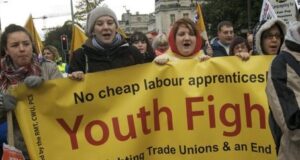
This is why in Cardiff, as youth fight for jobs is restarted, as part of a wider campaign, we will be taking on these issues facing precarious workers, hopefully leafleting them and talking to them about getting involved and joining a union to organise. As the furlough scheme is scrapped in October, and the jobs slaughter that will follow, this will undoubtedly effect hospitality workers, who some are still on ‘flexi furlough’. Help us with the youth fight for jobs campaign to start a serious attempt to permanently change the industry for the better.